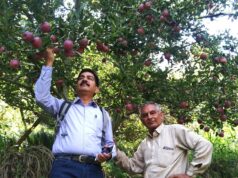

Struggling for breath in Himachal’s apple belt, twig burning has emerged as a growing menace, turning large parts of the State’s orchard regions into seasonal pollution hotspots. Apple-growing areas across Himachal Pradesh, particularly in Shimla district’s belt, including Moraog in Chopal, Theog, Kotkhai, Jubbal, Rohru, Nankhari, Kotgarh and Kumarsain, are witnessing worsening air quality due to the widespread practice of burning apple twigs and branches after pruning.
Each winter, soon after pruning operations, apple growers set fire to heaps of dry twigs, leaves and bushes inside orchards. The smoke from these fires often hangs over villages and valleys for days, creating smog-like conditions. Residents complain of eye irritation, coughing, breathlessness and headaches, while children, the elderly and people with respiratory ailments face heightened health risks. Locals say the pollution during the twig-burning season has started resembling stubble-burning episodes seen in the plains.
Despite repeated warnings and advisories, the practice continues year after year. Environmental experts point out that burning orchard waste releases fine particulate matter, carbon monoxide and other harmful gases, which significantly degrade air quality in the fragile Himalayan region. The problem is aggravated by geographical conditions, as smoke gets trapped in valleys during winter due to low temperatures and limited air movement.
Studies on biomass burning have shown that such emissions not only affect local air quality but also contribute to climate change. Repeated exposure to polluted air increases the risk of asthma, bronchitis and long-term lung damage. Experts warn that unchecked burning also affects soil health by destroying organic matter that could otherwise enrich orchard soils.
One of the major reasons behind the continuation of twig burning is the lack of affordable alternatives. Many apple growers say burning is the quickest and cheapest way to dispose of large quantities of pruning waste. While options such as shredding twigs for mulching, composting or converting them into organic manure exist, these require machinery and support that small and marginal growers often lack.
Amid growing concern, the administration has begun to tighten enforcement. In the Theog subdivision, the Sub-Divisional Magistrate has issued strict orders directing all panchayats to ensure that no apple branches or bushes are burned in orchards. The order warns that legal action will be taken against violators, and panchayats have been asked to monitor orchard areas closely and act against offenders.
Residents and environmental groups, however, say enforcement has historically remained weak, allowing the practice to go unchecked. They argue that strict penalties must be accompanied by sustained monitoring and awareness campaigns. There is also a growing demand for government support in the form of subsidies for shredders and composting equipment to provide practical alternatives to burning.
As Himachal Pradesh grapples with the combined challenges of air pollution and climate change, twig burning in apple orchards has moved beyond being a local issue. It now threatens public health, environmental balance and the long-term sustainability of apple cultivation. The action initiated in Theog is being closely watched, with hopes that it will lead to stricter enforcement and a wider policy push to end a practice that has turned the State’s apple belt into a seasonal pollution hazard.