
Shimla: The Supreme Court’s latest decision on Himachal Pradesh’s long-pending share in the Bhakra Beas Management Board (BBMB) projects has brought a decades-old dispute closer to resolution, but the legal victory has immediately triggered a political contest over who deserves credit for securing the state’s rights.
The ruling, delivered on November 6, 2026, directs Punjab and Haryana to supply Himachal Pradesh with 11,973 million units (MU) of electricity over 20 years. It follows the Court’s landmark 2011 judgment recognising Himachal’s entitlement to 7.19 per cent of the power generated by the Bhakra-Nangal and Beas projects.
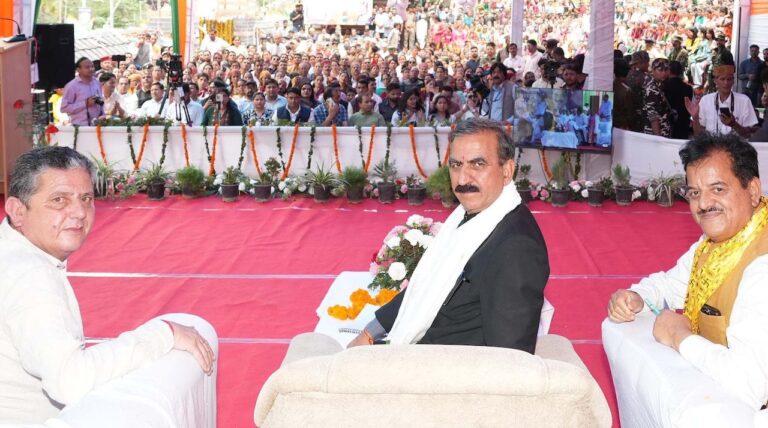
Chief Minister Sukhvinder Singh Sukhu’s Congress government can point to the fact that the dispute has reached a decisive settlement during its tenure. The BJP, however, argues that the outcome is the culmination of a legal and administrative struggle pursued by successive governments, particularly highlighting the 2011 judgment under former chief minister Prem Kumar Dhumal and the subsequent steps taken during the tenure of Jai Ram Thakur.
The emerging political narrative raises a fundamental question: should credit for a long-awaited state-level victory go to the government in power when the final settlement is reached, or to the successive governments, officials and legal teams whose efforts made it possible?
The answer lies in separating the legal history from the political messaging surrounding the verdict.
A dispute rooted in the reorganisation of Punjab
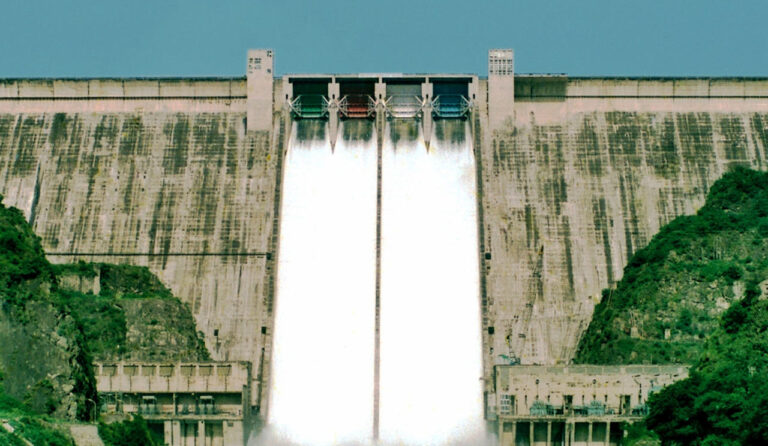
The BBMB dispute cannot be understood merely as a recent disagreement between the Congress and BJP governments. Its origins go back several decades, when the Bhakra-Nangal and Beas hydroelectric projects were developed during the existence of undivided Punjab.
The Supreme Court’s judgment records that the Bhakra-Nangal project was proposed in 1944. The projects involved substantial land submergence in areas that now form part of Himachal Pradesh, including the erstwhile princely state of Bilaspur and Kangra district. However, much of the electricity generated was utilised by the erstwhile composite Punjab and, following its reorganisation, distributed among the successor states and Chandigarh.
The reorganisation of Punjab under the Punjab Reorganisation Act, 1966, created the basis for Himachal Pradesh’s demand for a share in the benefits of these projects. The state argued that its share should reflect its entitlement as a successor state to composite Punjab.
Himachal maintained that it was not demanding a new concession but seeking its legitimate share in projects whose benefits had largely accrued to other states.
The dispute subsequently developed into a question of statutory entitlement, the interpretation of the reorganisation framework and the financial consequences of electricity generated over several decades.
The historical timeline: How the case progressed
1944
The project takes shape
The Bhakra dam project is proposed, followed by the development of the Beas projects. Large areas of land in territories now forming part of Himachal Pradesh are subsequently involved in the projects.
1966
Punjab is reorganised
The reorganisation of Punjab creates the framework for competing claims over assets and benefits. Himachal Pradesh subsequently asserts an entitlement of 7.19% in the power generated by the Bhakra-Nangal and Beas projects.
1969–1995
Representations fail to settle the dispute
Himachal formally presses its claim in 1969. The Centre rejects it in 1994, while a tripartite meeting in 1995 fails to produce a settlement.
1996
The Supreme Court battle begins
The state files an original suit under Article 131 of the Constitution against the Union of India and the other concerned states and Chandigarh. The case seeks recognition of Himachal’s share in the benefits of the projects.
2011
The landmark judgment
On September 27, the Supreme Court recognises Himachal Pradesh’s entitlement to 7.19% of the power generated by the Bhakra-Nangal and Beas projects and directs the Centre to calculate the amounts due. The ruling establishes the legal entitlement, but does not immediately resolve every question concerning past arrears and their valuation.
2011–13
The arrears are calculated
The Ministry of Power constitutes a committee in October 2011. In July 2013, the Centre places its calculation before the Court, estimating Himachal’s historical entitlement at 13,066 million units of electricity. Punjab and Haryana dispute aspects of the calculation and the valuation of the arrears.
2018
A proposed energy settlement
The Jai Ram Thakur-led BJP government’s Cabinet accepts an offer involving 13,066 million units of electricity instead of a cash payment. The proposal is intended to move the dispute towards settlement, but further legal and inter-state proceedings remain necessary.
2023
The Sukhu government renews the push
The Congress government forms a Cabinet subcommittee headed by Agriculture Minister Chander Kumar to examine Himachal’s claims relating to BBMB power projects and its demand concerning Chandigarh. The state pursues the preparation of a memorandum for the Centre.
2026
The final energy settlement
After further proceedings and unsuccessful attempts to resolve the dispute, the Supreme Court accepts the Centre’s cashless settlement framework on November 6. Punjab and Haryana are directed to supply the adjusted electricity arrears over 20 lean seasons.
The 2011 judgment was a milestone, not the end of the battle
One of the central issues in the current political controversy is the difference between securing legal recognition of a right and obtaining its actual implementation.
The 2011 Supreme Court judgment was a major breakthrough because it recognised Himachal Pradesh’s entitlement to 7.19% of the power generated by the projects. However, the calculation of historical arrears, the applicable electricity rate, capital costs and the method of payment remained contentious.
The Centre’s calculation of 13,066 million units covered the period beginning November 1, 1966, for the Bhakra-Nangal project, with the relevant starting dates for the Beas projects determined by their respective commencement of generation.
The dispute continued because the parties disagreed over the valuation and implementation of the entitlement. The 2011 ruling, therefore, did not automatically translate into the immediate delivery of all historical electricity dues.
This distinction is particularly important when assessing political claims. The BJP is justified in highlighting the 2011 ruling as a landmark achieved during its government under Prem Kumar Dhumal. Equally, that judgment alone did not deliver the final settlement now ordered by the Court.
What exactly has Himachal Pradesh gained in 2026?
The November 6 ruling provides a concrete framework for implementing the historical entitlement, while accounting for Himachal’s own financial obligations.
Recognised power share
7.19%
Net electricity arrears
11,973 MU
Settlement period
20 years
Annual supply
≈598 MU
MU means million units of electricity. The annual supply is to be delivered during the lean season, from October to March.
The Court recognised historical arrears of 13,066 MU but also determined that Himachal Pradesh had a capital-cost liability of approximately ₹420.77 crore in respect of the projects. This comprises about ₹249.23 crore attributable to Punjab and ₹171.55 crore to Haryana.
Rather than requiring the entire settlement to be made through cash payments, the Court directed that this liability be adjusted against the electricity arrears at ₹3.85 per unit, reducing the amount of electricity to be supplied to approximately 11,973 MU. The remaining power is to be delivered at approximately 598 MU annually over 20 lean seasons.
There is another important qualification: the electricity is not free. Himachal Pradesh must pay the applicable BBMB charges for the year in which each tranche is received.
The ruling provides a mechanism for recovering historical arrears and settling the capital-cost adjustment. It should not be presented as a cash award of thousands of crores or as an unconditional grant of free power.
What could it mean financially?
An analysis published by ThePrint on November 8 estimated that the additional electricity could save Himachal Pradesh around ₹300 crore annually if it replaces electricity purchases at an average rate of ₹5.12 per unit. The state government has projected a potential annual benefit of ₹600–800 crore, although that figure represents an estimated value of the power rather than guaranteed savings.
The actual benefit will depend on market prices, the cost of receiving the electricity, the extent to which it replaces purchases and whether any surplus can be sold.
For a state that faces seasonal electricity shortages and substantial power-purchase costs, the ruling could provide meaningful financial relief. But its long-term impact will need to be measured through actual electricity deliveries and audited savings, rather than political estimates alone.
The political credit war: Congress versus BJP
The verdict has now opened a new front in Himachal Pradesh’s political contest, with both major parties seeking to associate themselves with a victory that has developed across several governments.
Congress: Sukhu government claims the outcome as a present-tenure achievement
The Congress government can point to its continued pursuit of Himachal’s claim and the fact that the final settlement has been delivered during its tenure. Its political argument rests on the difference between winning a declaration of entitlement and obtaining an enforceable mechanism to recover the historical dues.
However, the timing of a verdict does not establish that one government alone caused it. The case had already been before the Supreme Court for three decades, and the 7.19% entitlement had been recognised in 2011.
BJP: Jai Ram Thakur argues that the victory belongs to successive governments
On November 7, Leader of the Opposition Jai Ram Thakur welcomed the verdict but criticised Chief Minister Sukhu for taking political credit. He highlighted the 2011 judgment under Prem Kumar Dhumal and the BJP government’s 2018 Cabinet decision to pursue a settlement through electricity rather than cash.
Thakur also referred to the contribution of earlier governments, including Virbhadra Singh’s role during the initiation of the Supreme Court case, and the work undertaken by successive administrations.
How strong are the competing political claims?
The BJP’s strongest argument is historical: the legal foundation of the 7.19% entitlement was established in 2011, during a BJP-led state government. It can also point to the 2018 Cabinet decision as evidence that efforts to settle the arrears continued during Jai Ram Thakur’s tenure.
The Congress’s strongest argument is about implementation: the present government has continued to pursue the claim, and the final judicial framework has emerged during its term. The 2023 Cabinet subcommittee is one identifiable step in that process.
Neither argument, by itself, establishes exclusive credit.
The Supreme Court’s judgment is the product of the judicial proceedings, the original entitlement ruling, the Centre’s calculations, arguments by the states and subsequent efforts to resolve the implementation dispute. The Court also acknowledged the role of Attorney General R. Venkataramani in facilitating mediation and formulating the settlement framework.
The political debate becomes misleading if either party portrays the entire outcome as its own achievement while ignoring the chronology.
The wider political game: Why BBMB matters beyond electricity
The dispute has implications beyond the immediate settlement. It concerns Himachal Pradesh’s relationship with the Centre and neighbouring states over the benefits of natural resources, the interpretation of inter-state agreements and the distribution of power generated from projects situated partly within its territory.
The Sukhu government has also raised other issues involving the state’s resource rights, including its demand for water-related charges and the Shanan power project. These are separate matters and should not be confused with the BBMB arrears settlement.
For the Congress, the ruling offers an opportunity to present itself as a government that has delivered a long-pending result. For the BJP, the same ruling offers an opportunity to remind voters that the original legal victory came during its tenure and that the state’s claim was pursued across party lines.
The credit contest also has a wider electoral dimension. In a state where questions of financial pressure, electricity costs, development and regional rights carry political weight, a major inter-state settlement can become a powerful symbol of administrative effectiveness.
But the political advantage of the verdict will depend on what happens next. If the promised electricity is delivered on schedule and produces measurable savings, the government in office may be able to claim credit for implementation. If delivery is delayed or the projected benefits fail to materialise, political opponents will have grounds to question the government’s claims.
Verdict secured, implementation remains the test
The November 2026 judgment is a significant development in Himachal Pradesh’s long struggle to secure its share in the Bhakra-Nangal and Beas projects. It converts a historical entitlement and years of disputed calculations into a defined schedule for supplying electricity arrears.
Yet the political narrative should not overshadow the central facts: Himachal’s claim dates back to the reorganisation of Punjab in 1966; the state approached the Supreme Court in 1996; its 7.19% entitlement was recognised in 2011; successive governments pursued the matter; and the latest ruling has established a mechanism for settling the outstanding electricity dues.
The Congress can claim that the final settlement arrived during its tenure. The BJP can claim that the legal foundation and earlier settlement efforts were built during previous administrations. Both claims have a factual basis, but neither supports exclusive ownership of the outcome.
Ultimately, the people of Himachal Pradesh stand to benefit not from political credit-taking, but from the timely implementation of the judgment, transparent accounting of electricity received and demonstrable reductions in the state’s power-purchase burden.