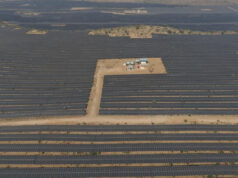

Hamirpur: Himachal Pradesh Chief Minister Sukhvinder Singh Sukhu has said that the state government will take back the Dhaulasidh Hydroelectric Project from SJVN Limited by paying Rs 800 crore, asserting that the government will not compromise on the interests and rights of the state.
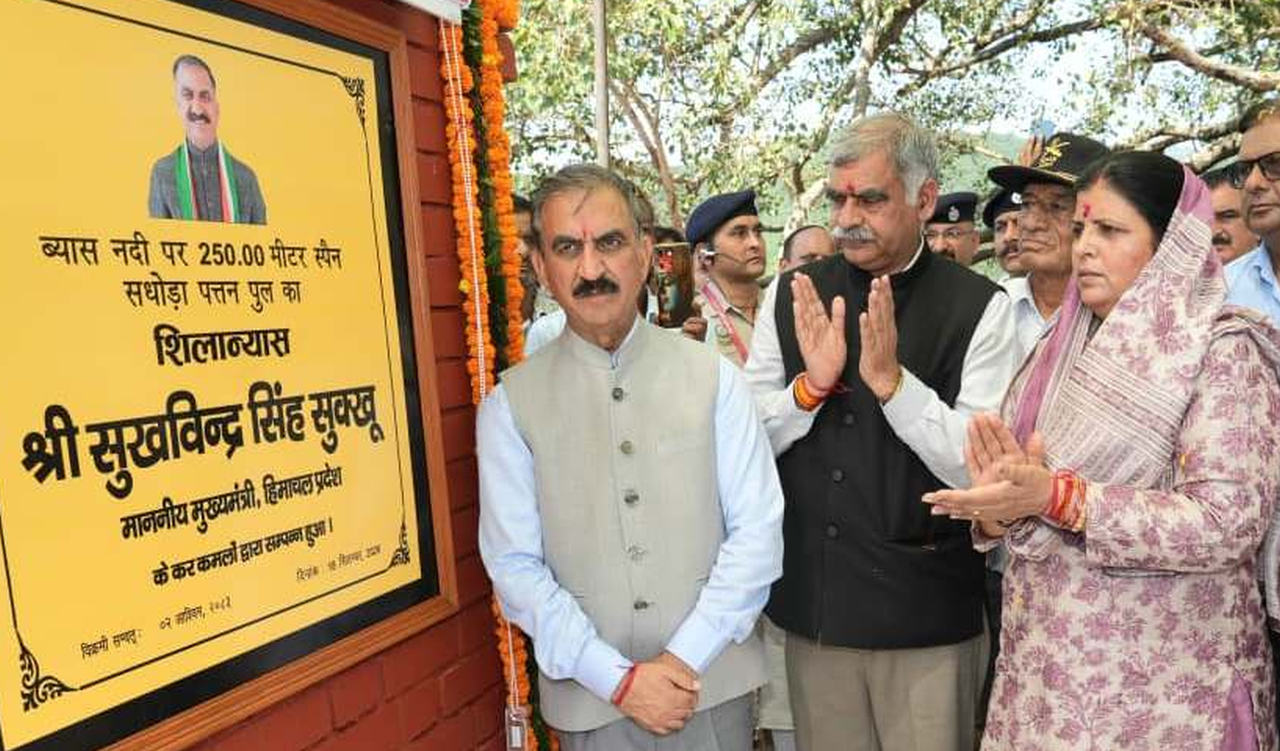
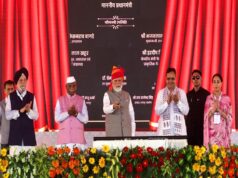
The Chief Minister announced while addressing a public gathering in Nadaun Assembly constituency of Hamirpur district after laying the foundation stone of the Rs 31.19-crore Sadhoorapattan Bridge over the Beas River.
Sukhu said the state government was committed to protecting Himachal Pradesh’s interests and would take all necessary steps to safeguard the state’s rights. He maintained that there would be no compromise on these issues under any circumstances.
The Chief Minister also highlighted the government’s expenditure on healthcare infrastructure in Hamirpur. He said Rs 450 crore had been provided for Hamirpur Medical College and alleged that the BJP had made no contribution towards the project.
Rs 31.19-Crore Bridge to Improve Connectivity
The Sadhoorapattan Bridge, being constructed at a cost of Rs 31.19 crore, will be 250 metres long and will have two lanes for motor vehicles along with a pedestrian footpath.
The bridge will connect Dobar Kalan village in Nadaun with Silah village in the Jwalamukhi area of Kangra district. The project is expected to benefit more than 30,000 people living across 15 gram panchayats in the Nadaun and Jwalamukhi Assembly constituencies, besides residents of the Sujanpur area.
Sukhu said the bridge would fulfil a long-standing demand of local residents and improve connectivity between the two regions.
The new bridge will provide a direct road link between Nadaun and Jwalamukhi, reducing travel distance and saving time for commuters. It is also expected to make the movement of vehicles and people easier and strengthen road connectivity in the surrounding areas.
The project is likely to provide greater convenience to residents travelling between Hamirpur and Kangra districts and improve access to markets, educational institutions, healthcare facilities and other essential services.