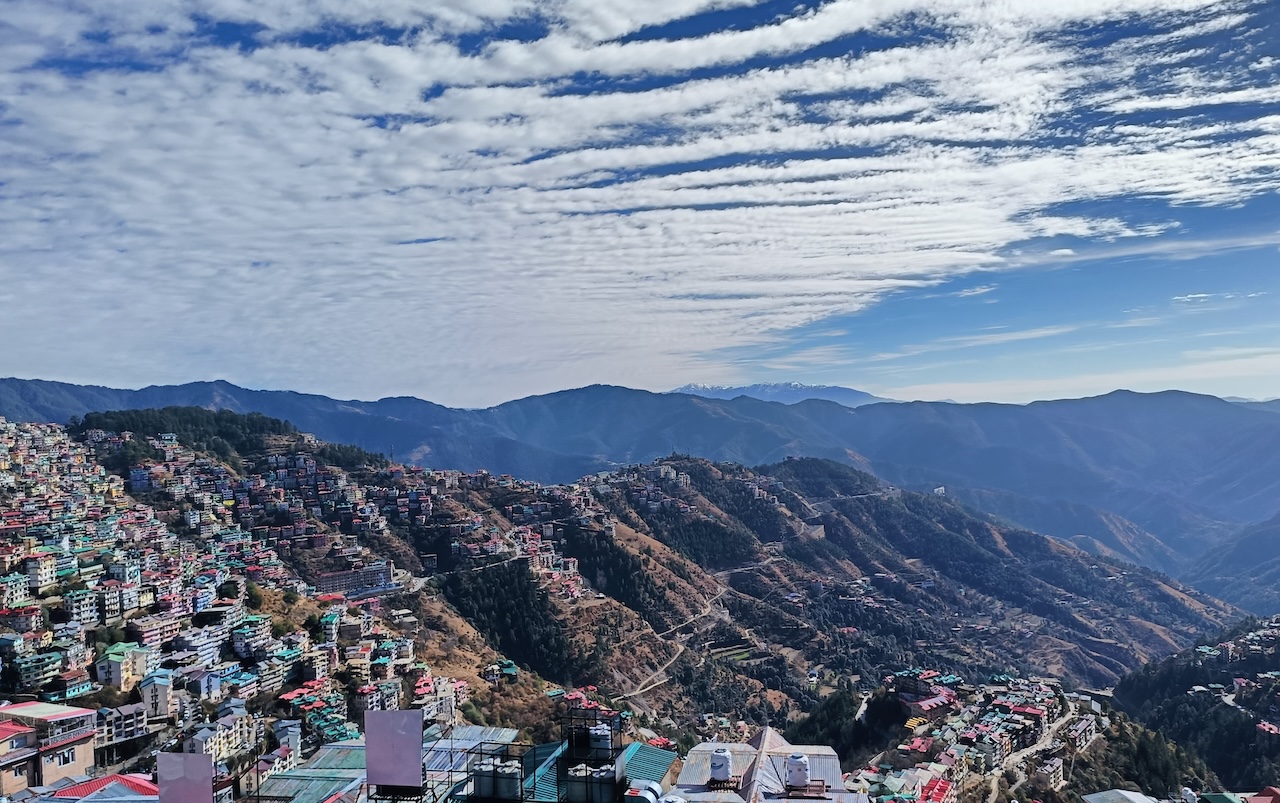
Shimla: Himachal Pradesh is witnessing a gradual increase in the duration of dry spells, raising concerns over changing rainfall patterns in the Western Himalayas, according to a comparative study covering Himachal Pradesh, Jammu & Kashmir and Uttarakhand.
The study, based on rainfall data from 1981 to 2020, found that consecutive dry days in Himachal Pradesh have increased at an average rate of 4.1 days per decade. An analysis using five-year rolling averages also indicated a gradual extension in the duration of dry spells in the state.
The research was published recently in the international research journal Discover Geoscience. The researchers, Kritika Nag, Sujata Pattnaik, Velusamy Venkataramanan, Vartika Sharma and M.S. Shekhar, are affiliated with the IGNOU, the National Centre for Medium Range Weather Forecasting (NCMRWF) and the Defence Geoinformatics Research Establishment (DGRE).
The study examined rainfall trends across the three regions and found contrasting patterns. While Himachal Pradesh recorded an increase in consecutive dry days, Jammu & Kashmir experienced a significant decline in total rainfall, rainfall intensity and the frequency of moderate to heavy precipitation events. Uttarakhand, meanwhile, showed no statistically significant long-term changes in the rainfall indices examined during the study period.
According to the study, total rainfall in Jammu & Kashmir declined by approximately 95.41 millimetres per decade, based on India Meteorological Department (IMD) data. The region also recorded significant reductions in the average intensity of rainy days, the frequency of days receiving 10 mm or 20 mm or more rainfall, and the contribution of heavy rainfall events.
The researchers attributed the differences in rainfall patterns across the Western Himalayas to a combination of atmospheric and geographical factors. These include mountain elevation, topography, the rising movement of air over mountainous terrain and weather systems such as Western Disturbances. These factors influence the distribution, intensity and frequency of precipitation, resulting in varying rainfall and drought trends across the three regions.
Meanwhile, Dr. Surender Paul, Regional Director of the India Meteorological Department for Himachal Pradesh, Punjab and Haryana, said that monsoon rainfall had declined over the last decade. He said he would examine the research paper to understand its findings.
The study highlights the importance of closely monitoring changing rainfall patterns in the Himalayan region. Longer dry spells can have implications for water availability, agriculture and ecosystems, making continued climate monitoring and region-specific assessments important for understanding emerging drought risks.
While the findings point to a clear increase in the duration of consecutive dry days in Himachal Pradesh during the period studied, the researchers’ comparative analysis also underscores that rainfall trends differ across the Western Himalayas, with each region exhibiting its own pattern of change.