
Uranium Detected at Multiple Locations; Study Conducted Under DAE-BRNS-Funded Research Project
Mandi/Hamirpur: A research project undertaken by the Indian Institute of Technology (IIT) Mandi has detected uranium in groundwater samples from parts of Himachal Pradesh’s Hamirpur and Mandi districts, highlighting the need for further scientific investigation into the region’s groundwater and underlying geology.
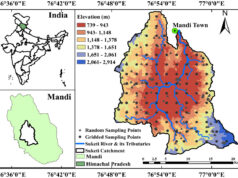
The study, titled “Spatial distribution of uranium and associated water quality parameters in Mandi, Kullu and Hamirpur,” was led by Dr. Dericks P. Shukla of IIT Mandi. The project was funded by the Board of Research in Nuclear Sciences (BRNS) under the Department of Atomic Energy (DAE) and was carried out between 2018 and 2020.
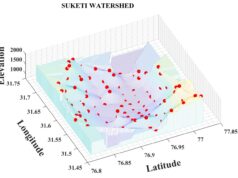
According to the research details provided, uranium was detected in groundwater samples collected from three locations each in Hamirpur and Mandi districts. In Mandi, the locations included Drang, Gumma and Jhatingri, while in Hamirpur, uranium was detected at Chakmoh, Patlandhar and Hamirpur town.
The reported average uranium concentration across the studied areas was around 2.96 parts per billion (ppb), with the highest reported concentration reaching 18.93 ppb. In Hamirpur, the highest value was recorded at Hamirpur town at 18.93 ppb, followed by Patlandhar at 15.53 ppb, according to the research material.
Geological Factors Under Study
The findings point towards a possible connection between uranium occurrence and the geological characteristics of the region. Hamirpur is largely underlain by rocks belonging to the Shivalik Group, including sandstone, conglomerate and shale.
The study indicates that natural geological processes may be responsible for uranium entering groundwater through leaching from mineral-bearing rocks. Areas showing higher uranium concentrations were also associated with elevated nitrate levels, making groundwater quality an important aspect of the investigation.
The research team also studied groundwater in Kullu district, although uranium was reportedly not detected at the locations examined there. IIT Mandi’s official project records list the uranium study as a completed research project led by Dr. Dericks P. Shukla, with Dr. Aditi Halder as co-principal investigator.
Further Investigation Needed
The detection of uranium in groundwater does not, by itself, establish the presence of a commercially exploitable uranium reserve beneath the region. Determining the extent, source and quantity of uranium mineralisation would require detailed geological surveys and further sampling.
The study is significant because it provides scientific data on the spatial distribution of uranium and associated water-quality parameters in parts of Himachal Pradesh. The project was specifically supported by the Department of Atomic Energy’s BRNS, indicating its relevance to research on uranium and groundwater quality.
The findings also add to the broader scientific interest in uranium-bearing geological formations in the Himalayan region. Any assessment of potential mineral reserves would require separate exploration and resource estimation by the competent government agencies.
For now, the IIT Mandi research establishes that uranium occurs naturally in groundwater at some of the locations studied in Hamirpur and Mandi, while further investigation will be necessary to determine the geological extent and significance of the deposits.