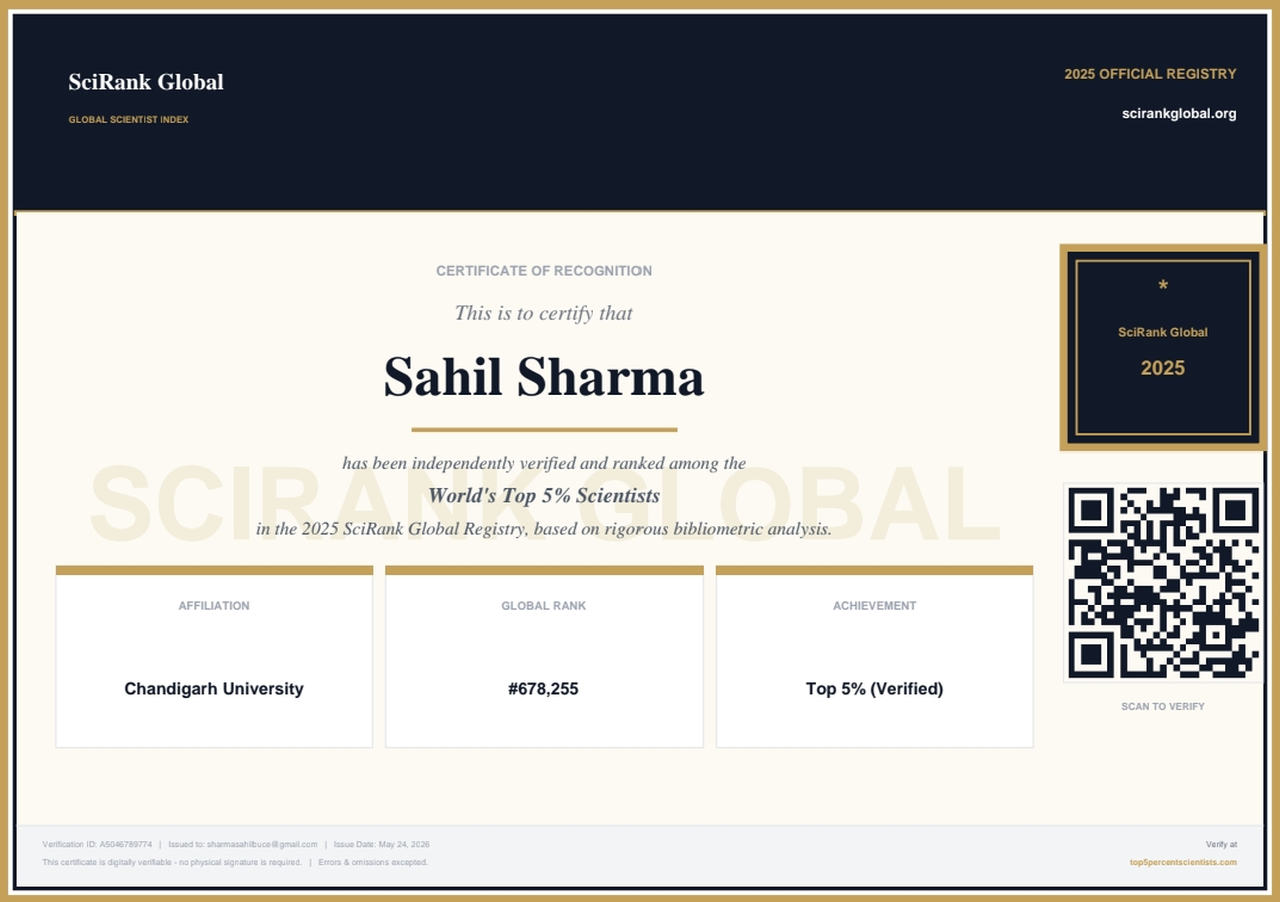
Dr Sahil Sharma, a native of Shimla and Associate Professor in the Civil Engineering Department at Maharishi Markandeshwar (MMU) Mullana, has been ranked among the top five per cent of scientists worldwide in the 2025 SciRank Global Registry, based on bibliometric analysis of research output and impact.
Dr Sharma completed his schooling from St Edward’s School, Shimla, and earned his PhD from the Indian Institute of Technology (IIT) Mandi. His recognition highlights the growing contribution of researchers from Himachal Pradesh to addressing global environmental and climate challenges.
His research focuses on water resources and environmental engineering, areas that are becoming increasingly important as rapid urbanisation and climate change place mounting pressure on natural ecosystems and infrastructure.
A major part of his work examines urban heat island effects, changing land-use patterns, air quality assessment, salinity risks and sustainable environmental management practices. Rising temperatures caused by dense infrastructure and shrinking green cover are intensifying water stress, increasing energy demand and making cities more vulnerable to environmental challenges.
Dr Sharma’s studies also investigate how rapid and unplanned urban expansion affects groundwater recharge, surface runoff and flood risks. By employing geospatial analysis, remote sensing and environmental modelling, his research seeks to provide scientific inputs for climate-resilient urban planning and sustainable water resource management.
Another important aspect of his work relates to environmental sustainability through studies on pollution monitoring, air quality standards and salinity risk assessments. Such issues are critical in areas facing groundwater degradation and soil salinisation, which have implications for agricultural productivity, public health and ecosystem resilience.
In addition, his research explores sustainable engineering approaches, including strength optimisation and the use of green concrete technologies to reduce the environmental footprint of infrastructure development.
With cities around the world grappling with rising temperatures, erratic weather patterns and increasing pressure on water resources, experts believe interdisciplinary research combining hydrology, environmental science and sustainable engineering will play a crucial role in building resilient and sustainable urban systems.