
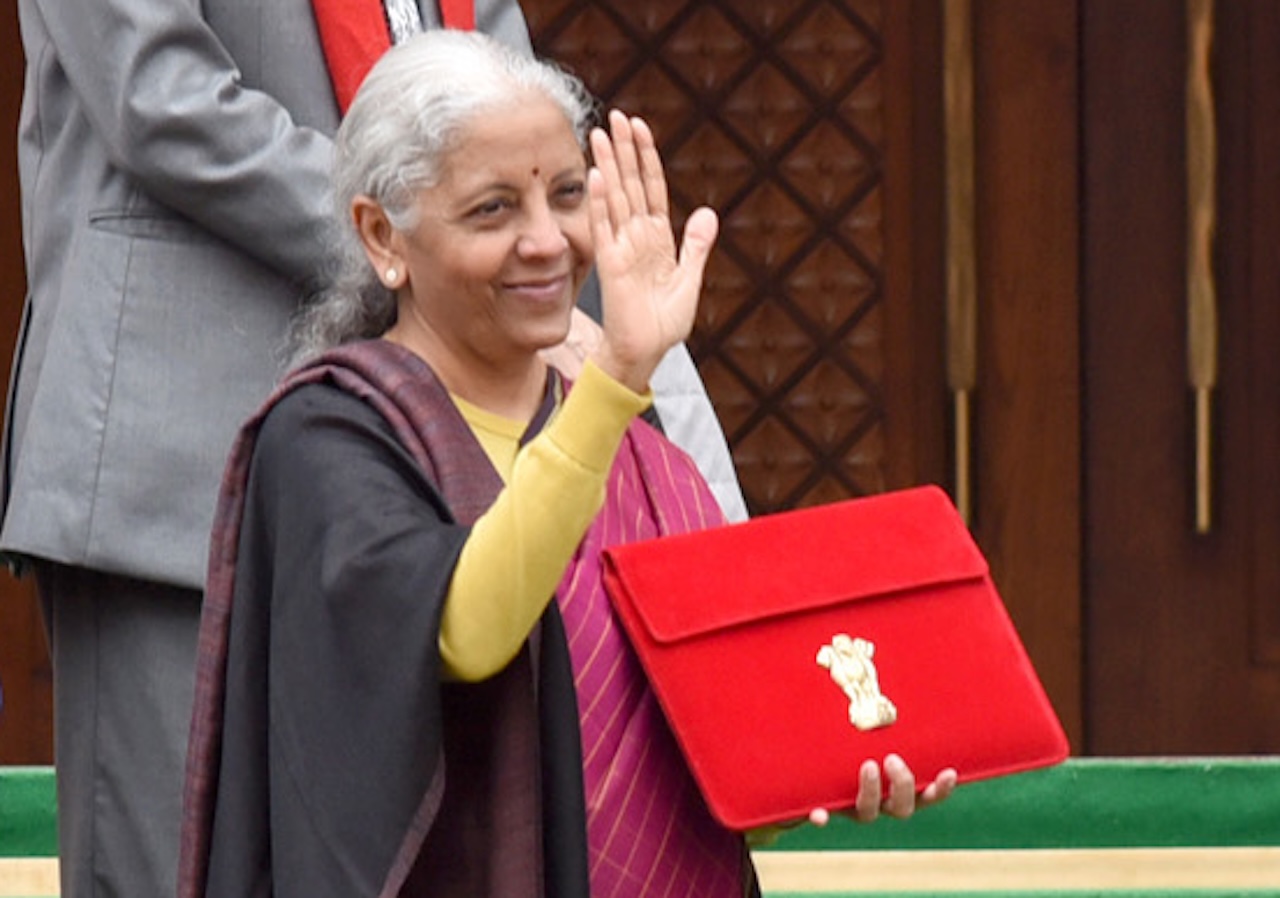
New Delhi: The Union Budget 2026–27 presented by Finance Minister Nirmala Sitharaman places strong emphasis on higher capital expenditure, job creation and further easing the cost of doing business as the government seeks to sustain economic growth amid a challenging global environment. The Budget, prepared for the first time in Kartavya Bhawan, is guided by the objectives of accelerating growth, building people’s capacity and ensuring inclusive development.
Public capital expenditure has been increased to ₹12.2 lakh crore in 2026–27 from ₹11.2 lakh crore in the previous year, continuing the investment-led growth strategy. The focus remains on infrastructure creation, logistics efficiency and urban economic expansion. Seven high-speed rail corridors have been proposed as growth connectors between major cities, while new freight corridors and national waterways are planned to promote cost-effective and environmentally sustainable movement of goods.
Job creation is central to the Budget’s approach. A ₹10,000 crore SME Growth Fund has been announced to support MSMEs with the potential to scale up and generate employment. The labour-intensive textile sector will see an integrated programme covering fibre production, modernisation of clusters, support to handloom and handicraft workers, and skill upgradation under Samarth 2.0. The government also announced Biopharma Shakti with an outlay of ₹10,000 crore to strengthen domestic manufacturing of biologics and biosimilars, a move expected to create high-skilled jobs and reduce import dependence.
To support skill development and employment for youth, the Budget outlines measures across education, tourism and sports. AVGC content creator labs will be set up in schools and colleges to meet the growing demand for skilled professionals in the animation and gaming sector. A national programme has been announced to upskill 10,000 tourist guides, while the Khelo India Mission aims to build a structured talent pipeline and sports infrastructure over the next decade.
Ease of doing business has been addressed through tax and customs reforms. The New Income Tax Act, 2025 will come into force from April 2026 with simplified rules and redesigned forms to reduce compliance burden. Penalty and prosecution provisions are being rationalised to cut down litigation. For businesses, IT and related services have been grouped under a single category with a higher safe harbour threshold, providing certainty and reducing disputes.
On the customs front, duties have been rationalised to support manufacturing, exports and ease of living. Customs warehousing will shift to a self-declaration and risk-based audit system, while cargo clearances from multiple agencies will be integrated through a single digital window by the end of the financial year. Duty reductions on personal imports and exemptions for key sectors such as energy, aviation and pharmaceuticals are expected to lower costs and improve competitiveness.
With a fiscal deficit target of 4.3 percent of GDP and a declining debt-to-GDP ratio, the Budget signals continued fiscal consolidation alongside higher public investment. Overall, Union Budget 2026–27 seeks to drive growth through higher capex, expand employment opportunities and create a simpler, more predictable business environment.