

An argument once shared between friends from Uttarakhand and Himachal Pradesh over who truly deserves the title of Devbhoomi may sound casual, even familiar. Yet, beneath that debate lies a much deeper question — one rooted not in rivalry, but in history, memory, and responsibility. Much like the age-old assertion, “Who is more Indian than us?”, the claim to Devbhoomi is not about superiority, but about continuity — about a civilisation shaped long before modern political boundaries were drawn.
Ancient texts place nature, not structures, at the centre of sanctity. In the Mahabharata’s Shanti Parva, Bhishma tells Yudhishthira that lands through which sacred rivers flow are the most holy. Devbhoomi, therefore, is defined by rivers, mountains, forests, and balance — not by administrative boundaries or tourism statistics. It is not a label bestowed by governments but a condition sustained by protection.
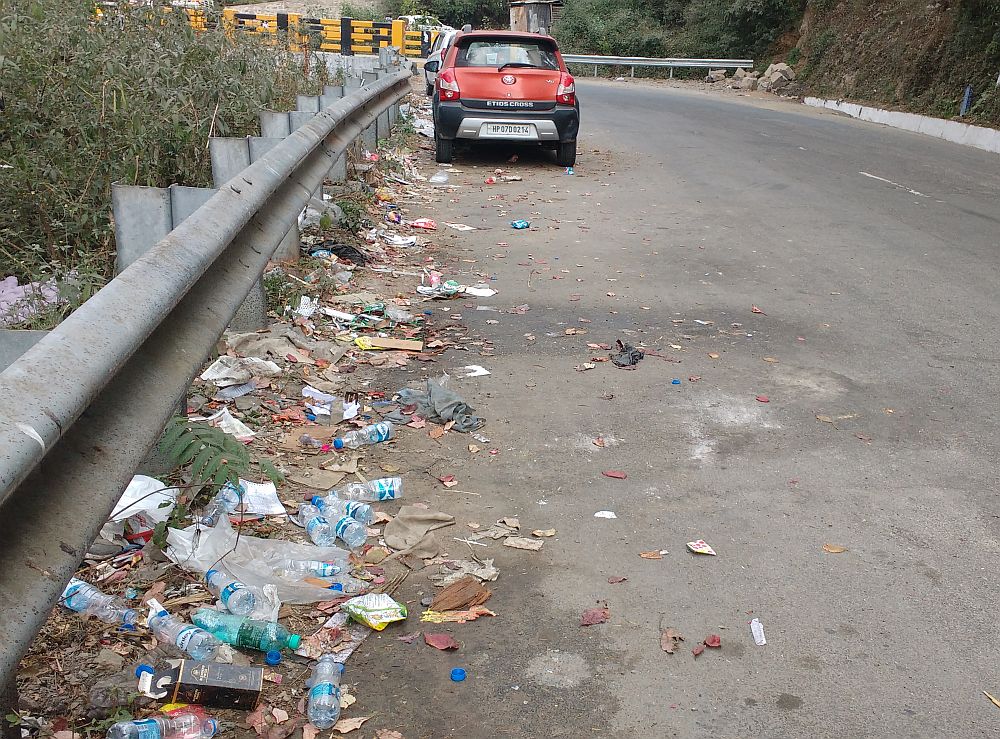
Yet governance today treats Devbhoomi as a branding exercise. Religious symbolism is amplified, while environmental safeguards are weakened. Across Uttarakhand and Himachal Pradesh, unregulated tourism, aggressive construction, and infrastructure expansion in fragile zones continue without adequate ecological scrutiny. The result is predictable and already visible.
Dehradun’s recent air quality index nearing 300 is not an anomaly; it is a warning. For mountain communities, environmental decline is lived daily — in drying springs, unstable slopes, recurring landslides, and increasingly erratic monsoons. If Devbhoomi is sacred, why are those who live closest to it paying the highest price for development decisions made elsewhere?
Scientific assessments leave little room for denial. Studies by the International Centre for Integrated Mountain Development and the World Bank describe the Himalayas as a “Himalayan Grey Zone,” warming faster than the global average. Black carbon from diesel emissions and stubble burning is accelerating snowmelt in regions such as Mussoorie and Shimla. The Landslide Atlas of India 2023 places both Uttarakhand and Himachal Pradesh among the country’s most landslide-prone states, while the State of India’s Environment Report 2024 highlights rising glacial lakes and rapid glacier retreat in the western Himalayas.
Despite this, policy responses remain cosmetic. Environmental impact assessments are diluted, carrying-capacity studies are ignored, and disaster management remains reactive rather than preventive. Devbhoomi is celebrated in speeches and posters, but compromised in planning files.
Pride without responsibility is hollow. If governments invoke Devbhoomi as cultural identity, they must also accept its ecological cost. Protecting rivers, regulating construction, enforcing tourism limits, and planning for climate resilience are not ideological choices — they are governance necessities.
Devbhoomi cannot survive as a slogan. Essence without existence has no meaning. A land allowed to choke under pollution and destabilise under concrete cannot be preserved by symbolism alone.
Devbhoomi must be recognised as a living ecological system, demanding science-based, accountable policy. Its protection cannot be confined by state borders or political convenience. If Devbhoomi is to endure beyond rhetoric, environmental protection must move from sentiment to statute. Anything less is not reverence — it is neglect.
— Aradhya Maithani
(State Representative, National Youth Parliament 2024)