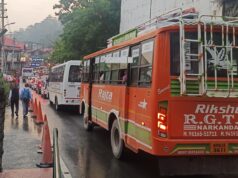

Weekend tourist rush triggers traffic chaos from Shimla and Manali to Kasauli and Lahaul-Spiti; experts warn unchecked tourism could threaten fragile Himalayan ecology and water security
The long-weekend tourist rush across Himachal Pradesh has once again exposed the widening gap between the state’s growing tourism economy and its fragile hill infrastructure.
From Shimla and Manali to Kasauli, McLeodganj, Dharamshala, Bir-Billing, Tirthan Valley and other popular destinations, thousands of vehicles poured into the state, resulting in long traffic jams, overcrowded tourist spots and parking chaos.
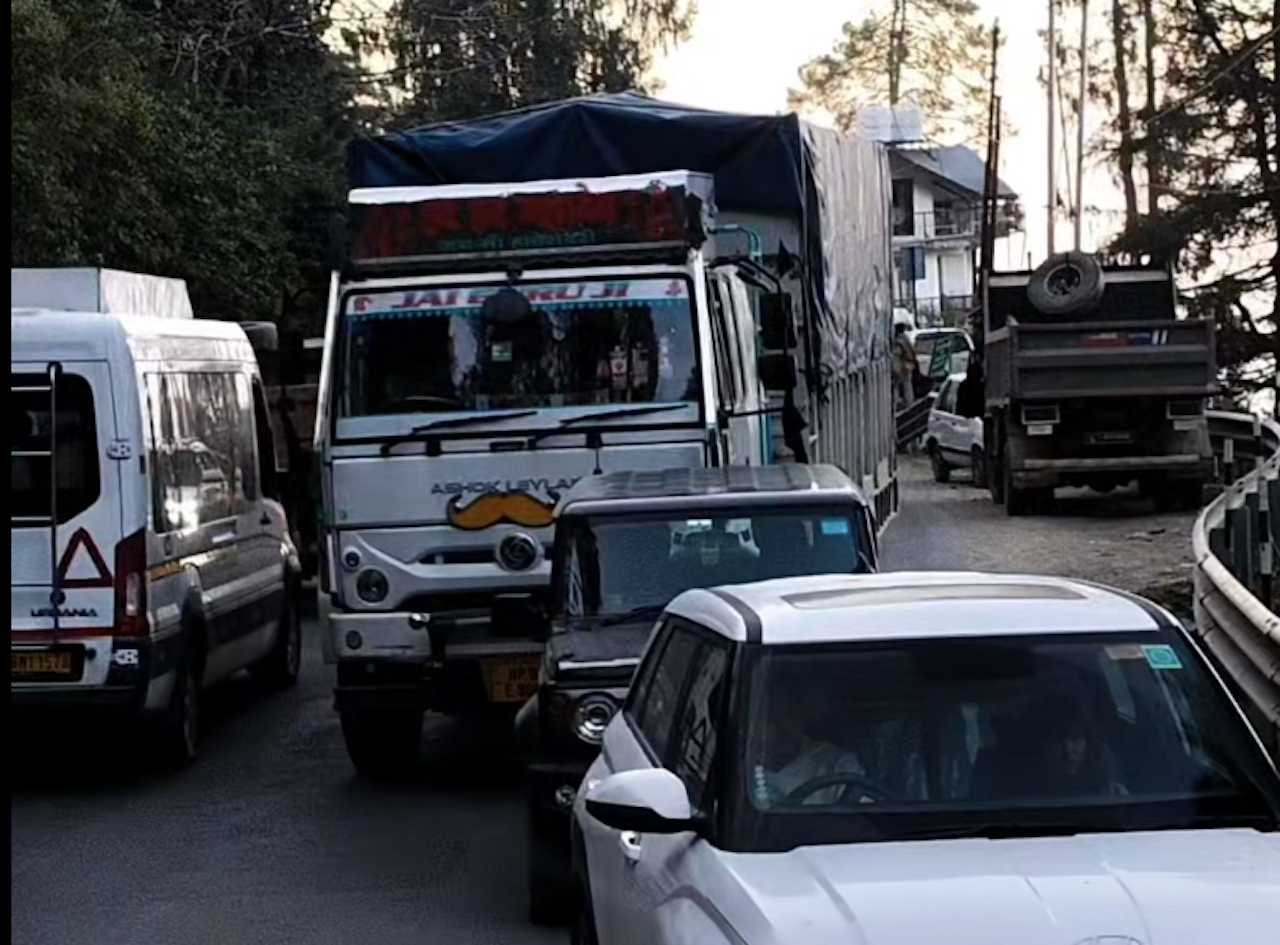
While the surge has brought relief to hotels, restaurants, taxi operators and other tourism-dependent businesses after a relatively subdued period, the scale of the influx has also revived a more serious question: how much tourism can Himachal’s mountains sustain?
The weekend congestion is no longer merely a traffic-management problem. It is increasingly becoming a warning about the consequences of unplanned and excessive tourism in one of India’s most environmentally fragile regions.
Shimla turns into a traffic maze
In Shimla, traffic congestion persisted on Circular Road from Saturday morning as tourists from Punjab, Haryana, Chandigarh, Delhi, Rajasthan and other parts of the country arrived in large numbers.
The parking facility near the Lift was full by around 11 am, with queues of vehicles stretching towards Tutu. Traffic was also slow-moving between the Vidhan Sabha area and Boileauganj.
Long queues were seen outside the Lift on Cart Road, while vehicles belonging to tourists looking for accommodation were parked along roadsides after hotel parking spaces filled up. This further narrowed the already limited road space.
The city’s Mall Road, Ridge and other tourist attractions remained crowded throughout the day.
Hotel occupancy, which was around 70 per cent on Friday, rose to nearly 80 per cent by Saturday evening, with several hotels reporting full bookings.
For the tourism industry, the weekend rush has provided much-needed business. Hotel, restaurant, taxi and other tourism operators, who had witnessed weak footfall during the preceding weeks, have welcomed the sudden increase in visitors.
But the economic gains are increasingly accompanied by environmental and civic costs.
Manali struggles with thousands of vehicles
Kullu-Manali witnessed an even bigger tourist surge.
Traffic jams were reported on the Manali, Manikaran-Jari and Banjar-Jibhi routes, while congestion was also witnessed along the Jibhi-Manali stretch.
Hotel and homestay occupancy, which had remained around 20–30 per cent during the rainy period, climbed to around 60–70 per cent, with several properties reporting occupancy of up to 80 per cent.
Data from the Green Tax barrier indicates the scale of the influx. Around 1,800 tourist vehicles entered Manali on Thursday, followed by nearly 3,000 on Friday and approximately 3,500 on Saturday.
Thousands more visitors arrived through more than 300 Volvo buses during the three-day period.
Tourist movement remained heavy towards Rohtang Pass, Sissu, the Atal Tunnel and Solang Nala, with the onset of colder weather further increasing interest in high-altitude destinations.
Kasauli, Dharamshala and Kangra also face pressure
Kasauli experienced severe traffic congestion as hundreds of vehicles entered the popular hill station. The Cantonment’s multi-purpose parking facility filled up, forcing authorities to stop vehicles at the barrier.
Traffic queues extended towards Kasauli Resort and from Kimmughat to Garkhal. With parking spaces unavailable, some tourists parked vehicles illegally along roadsides, creating further bottlenecks.
Similar scenes were reported on the Dharampur-Kasauli route.
In Kangra, increasing tourist arrivals in McLeodganj, Dharamkot, Bhagsu, Dharamshala and Bir-Billing have prompted police to strengthen traffic and security arrangements.
Additional police personnel have been deployed, while traffic officers, Home Guards and Quick Reaction Teams have been positioned at strategic points. Special arrangements have also been made for tourists heading towards Triund, including registration at Galu.
When tourism becomes over-tourism
The question, however, goes beyond how many vehicles can be managed on a holiday weekend.
Himachal Pradesh is a mountainous state with narrow roads, limited parking, fragile slopes, vulnerable drainage systems and increasingly stressed water resources. Its carrying capacity cannot be compared with that of large plains-based cities.
Yet tourism development is increasingly being measured by the number of visitors arriving rather than by whether the mountains can safely accommodate them.
Every long weekend now brings a familiar pattern: highways packed with cars, hill roads converted into parking spaces, hotels overflowing, waste generation increasing and local residents struggling to move through their own towns.
The problem becomes particularly serious when tourism expands into environmentally sensitive and high-altitude areas.
The opening and increasing accessibility of Lahaul-Spiti has brought a new tourism frontier into the Inner Himalayas. Places that were once naturally protected by difficult terrain and limited accessibility are now witnessing rapidly increasing tourist movement.
This expansion needs to be approached with extreme caution.
Fragile Himalayas cannot sustain unlimited tourism
The Himalayas are not an unlimited tourism resource.
Road widening, construction, parking, hotels, resorts, water extraction and increasing vehicular movement all place pressure on mountain ecosystems. The consequences are not confined to the tourist destinations themselves.
The Himalayan region is also a critical source of water for millions of people downstream. Damage to springs, catchments, glaciers, wetlands and natural drainage systems can eventually affect water availability far beyond the immediate tourism zones.
This makes the unchecked expansion of tourism a potential water-security issue, not simply an environmental concern.
The experience of repeated landslides, flash floods, cloudbursts and road disruptions in the state should serve as a warning. When fragile slopes are subjected to increasing construction and traffic pressure, the risks can multiply.
Himachal needs a tourism reset
The answer cannot simply be to build more roads and parking lots every time tourist numbers rise.
Such an approach risks creating a cycle in which increased infrastructure attracts more tourists, which then requires still more infrastructure, putting additional pressure on the mountains.
Himachal needs a tourism model based on carrying capacity rather than unlimited footfall.
Authorities should identify the maximum number of vehicles and visitors that individual destinations can safely accommodate and regulate tourist entry accordingly. Parking capacity, water availability, waste-management systems, road capacity, ecological sensitivity and emergency-response capabilities should form the basis of such assessments.
High-altitude and ecologically fragile destinations, particularly in Lahaul-Spiti and other parts of the Inner Himalayas, require even stricter controls.
Weekend traffic jams may appear to be a temporary inconvenience. But the larger warning is far more serious.
If the mountains are treated as an unlimited tourism marketplace, the very landscape that attracts visitors could eventually be damaged beyond repair.
For Himachal Pradesh, the time has come to move from the race for more tourists to the more difficult question of sustainable tourism.
The “madness” of unchecked over-tourism cannot be allowed to become the price of economic growth. The hills need visitors—but they also need limits.