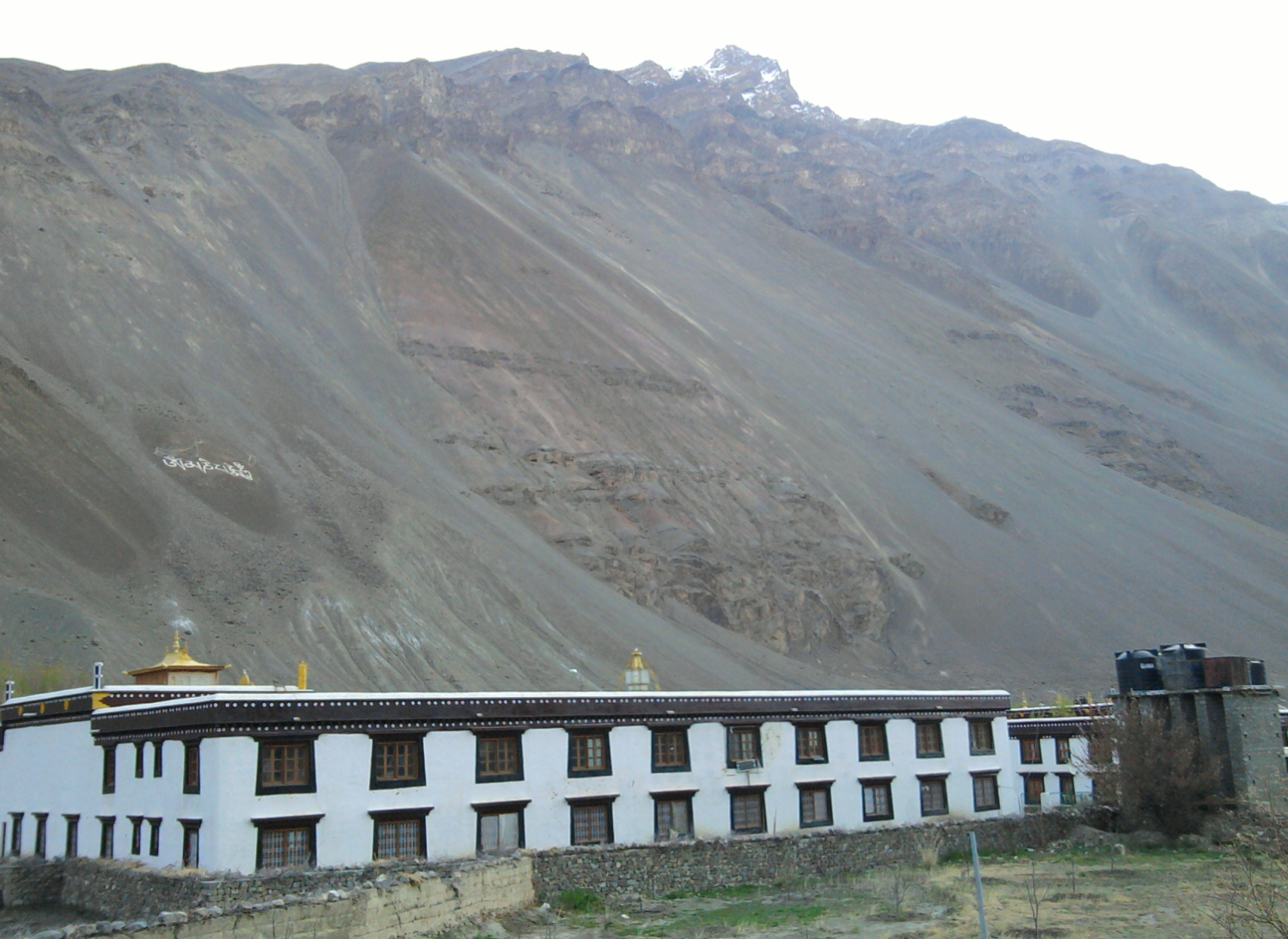

Shimla: Tabo is a place where the word “cold” is almost part of its identity. Nestled in the high-altitude Spiti Valley, the settlement is surrounded by barren mountains, thin air and a landscape shaped by severe winters. Yet on Sunday, the mercury climbed to 31.9°C in Tabo—an extraordinary contrast for one of Himachal Pradesh’s most famously cold and high-altitude regions.
The reading becomes even more striking when compared with temperatures elsewhere in the state. Una, Himachal’s hottest station on Sunday, recorded 34.6°C, while Bilaspur was at 33.5°C, Neri at 33.2°C, Mandi at 32.8°C, Kangra at 32.1°C and Hamirpur at 32°C. Tabo, at 31.9°C, was therefore only a few degrees cooler than some of the state’s traditionally hot low-altitude areas.
Keylong, another high-altitude centre in Lahaul-Spiti, also recorded a relatively warm maximum of 26.1°C. In comparison, Manali recorded 24.2°C and Shimla 24.1°C.
A Cold Desert That Can Get Surprisingly Hot
The numbers are striking, but there is an important story behind them.
Tabo is located at roughly 3,280 metres above sea level and lies in the Spiti Valley, which the district administration identifies as part of the Indian cold desert. The Spiti valley floor itself has an average elevation of around 4,270 metres and receives very little rainfall because it lies in the rain-shadow zone of the Himalayas.
And this is where the apparent contradiction begins: a cold desert can have very hot afternoons.
The term “cold desert” refers primarily to the region’s overall climate and aridity, not to permanently low daytime temperatures. Spiti is extremely dry, receives scant rainfall and experiences severe winters. But during summer, strong sunshine can produce substantial daytime heating, particularly under clear skies.
Why High Altitude Does Not Always Mean Low Daytime Temperatures
The dry atmosphere and high solar radiation can allow temperatures to rise rapidly during the day, even while nights remain much cooler.
The region’s climate is characterised by significant differences between daytime and nighttime temperatures. While summer afternoons can become surprisingly warm, temperatures can fall sharply after sunset.
This is one of the defining characteristics of high-altitude desert environments such as Spiti.
The Bigger Question: Is the Himalayas Warming?
A single day’s temperature cannot establish climate change. Scientists need long-term records spanning decades to determine whether average temperatures are rising, whether heat extremes are becoming more frequent and whether seasonal patterns are shifting.
However, there is increasing evidence that the Himalayan region is experiencing significant climatic changes.
Himachal Pradesh has witnessed a growing number of extreme weather events in recent years, including periods of unusually high temperatures. Even traditionally cool hill stations have experienced temperatures well above their normal summer levels.
For high-altitude regions, the implications of warming can extend far beyond discomfort.
Why a Warmer Spiti Matters
Lahaul-Spiti’s environment is closely connected to snow, ice and water availability. Changes in temperature can influence snow accumulation, snowmelt timing, glaciers, streams and water availability for agriculture and local communities.
The region’s fragile mountain ecosystems are also particularly sensitive to changes in temperature and precipitation.
For communities that depend on carefully balanced mountain water systems, even changes in the timing of snowmelt can have consequences.
One Day Does Not Make a Climate Trend
There is an important distinction between an unusual weather event and climate change.
Sunday’s 31.9°C reading in Tabo does not, by itself, demonstrate that the region is undergoing a permanent transformation. Weather can vary considerably from one day to another because of cloud cover, wind, sunshine, atmospheric conditions and local geography.
But repeated observations over many years can tell a different story.
If high-temperature records in traditionally cold regions become increasingly common, scientists can examine whether the frequency and intensity of such events are changing.
Tabo’s 31.9°C Is a Reminder
The contrast on Sunday was difficult to ignore. Una recorded 34.6°C, while Tabo—thousands of metres higher in the Himalayan cold desert—reached 31.9°C.
That does not mean Tabo has lost its cold-desert character. It shows instead that the Himalayan climate is much more complex than the simple assumption that higher altitude always means colder weather.
For years, the popular image of the Himalayas has been dominated by snow, glaciers and freezing temperatures. Increasingly, however, another number deserves attention: the temperature.
When the thermometer in a place like Tabo approaches 32°C, it is worth watching closely—not because one hot afternoon proves a climate crisis, but because a long-term pattern of such events could reveal how rapidly the Himalayan climate is changing.