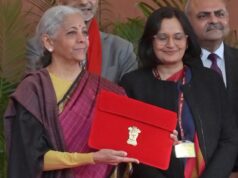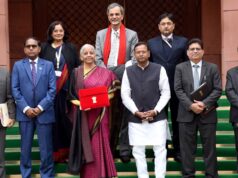

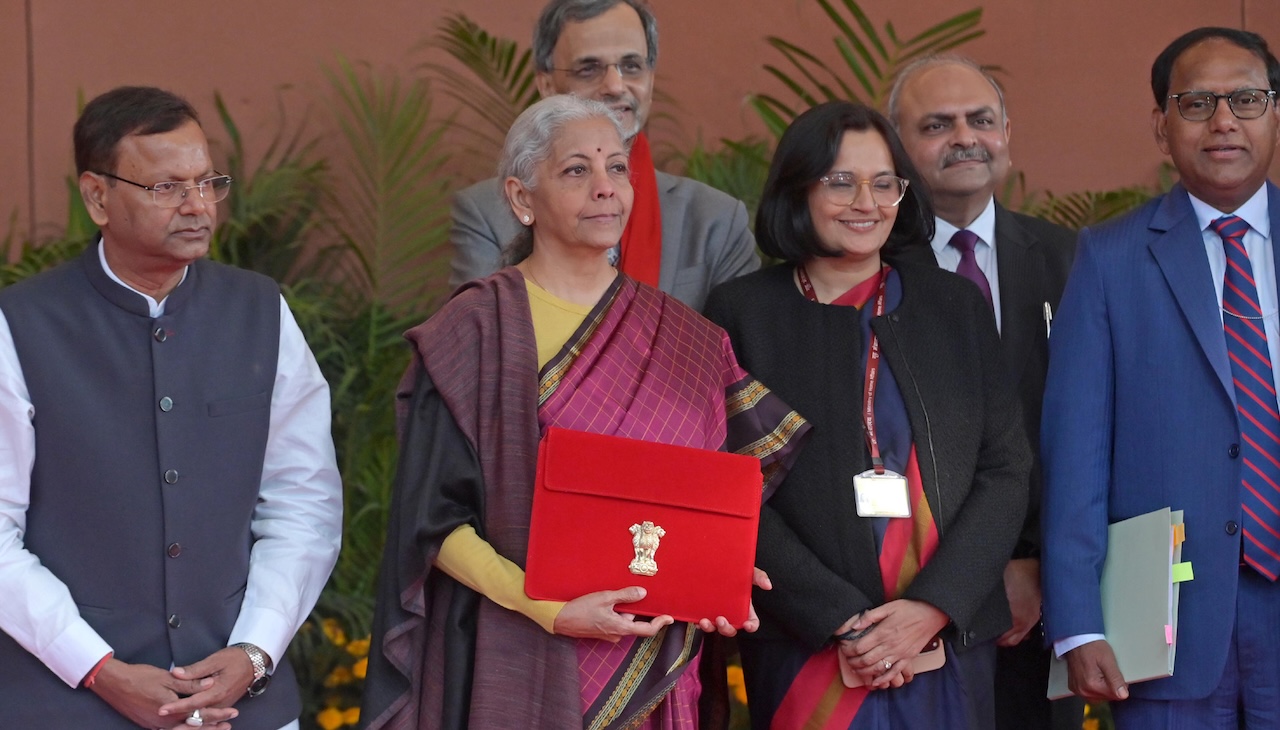
New Delhi: The Union Budget 2026–27 presented by Finance Minister Nirmala Sitharaman on Saturday gave a significant push to the biopharma sector, information technology services, and environmentally sustainable transport, signaling a strategic shift toward future-focused industries and green growth.
To position India as a global biopharmaceutical manufacturing hub, the Budget announced Biopharma Shakti, a programme with an outlay of ₹10,000 crore to build a robust ecosystem for domestic production of biologics and biosimilars. The initiative will include setting up new institutes, upgrading existing ones, expanding accredited clinical trial sites and strengthening regulatory capacity, all aimed at reducing import dependence and creating high-skill jobs across the biotechnology value chain.
The Budget also emphasised the role of the information technology sector as one of India’s growth engines. It has grouped related services — software development, IT enabled services, knowledge process outsourcing and contract R&D — into a single category with a common safe harbour margin of 15.5 percent. The threshold for companies to avail safe harbour provisions has been raised from ₹300 crore to ₹2,000 crore, making tax compliance simpler and more predictable for IT firms. The Unified safe harbour regime and automated rule-driven approvals are expected to reduce disputes and support scaling of Indian IT services.
To attract global investment in technology infrastructure, the government has offered a tax holiday until 2047 for foreign cloud service providers using Indian data centres. Non-residents paying tax on a presumptive basis will also be exempted from Minimum Alternate Tax, making India a more attractive destination for global business operations.
Green transport received a major focus in Union Budget 2026 with the announcement of seven high-speed rail corridors that will serve as “growth connectors” between key cities. These corridors — including Mumbai-Pune, Hyderabad-Bengaluru and Delhi-Varanasi — are designed to promote energy-efficient passenger mobility, reduce carbon emissions and strengthen intercity connectivity. The Budget also prioritised dedicated freight corridors, expanded national waterways and logistics infrastructure to support sustainable cargo movement.
Public capital expenditure was enhanced to ₹12.2 lakh crore for 2026–27, with a noticeable share slated for infrastructure that supports both economic efficiency and environmental sustainability. Investments in rail, waterways and green transport are expected to generate jobs in construction, operations and allied services while reducing India’s carbon footprint.